
Freedom within a beautifully prepared environment.
Montessori education combines careful observation, hands-on materials, real responsibility, uninterrupted work cycles, and respect for each child's developmental path.
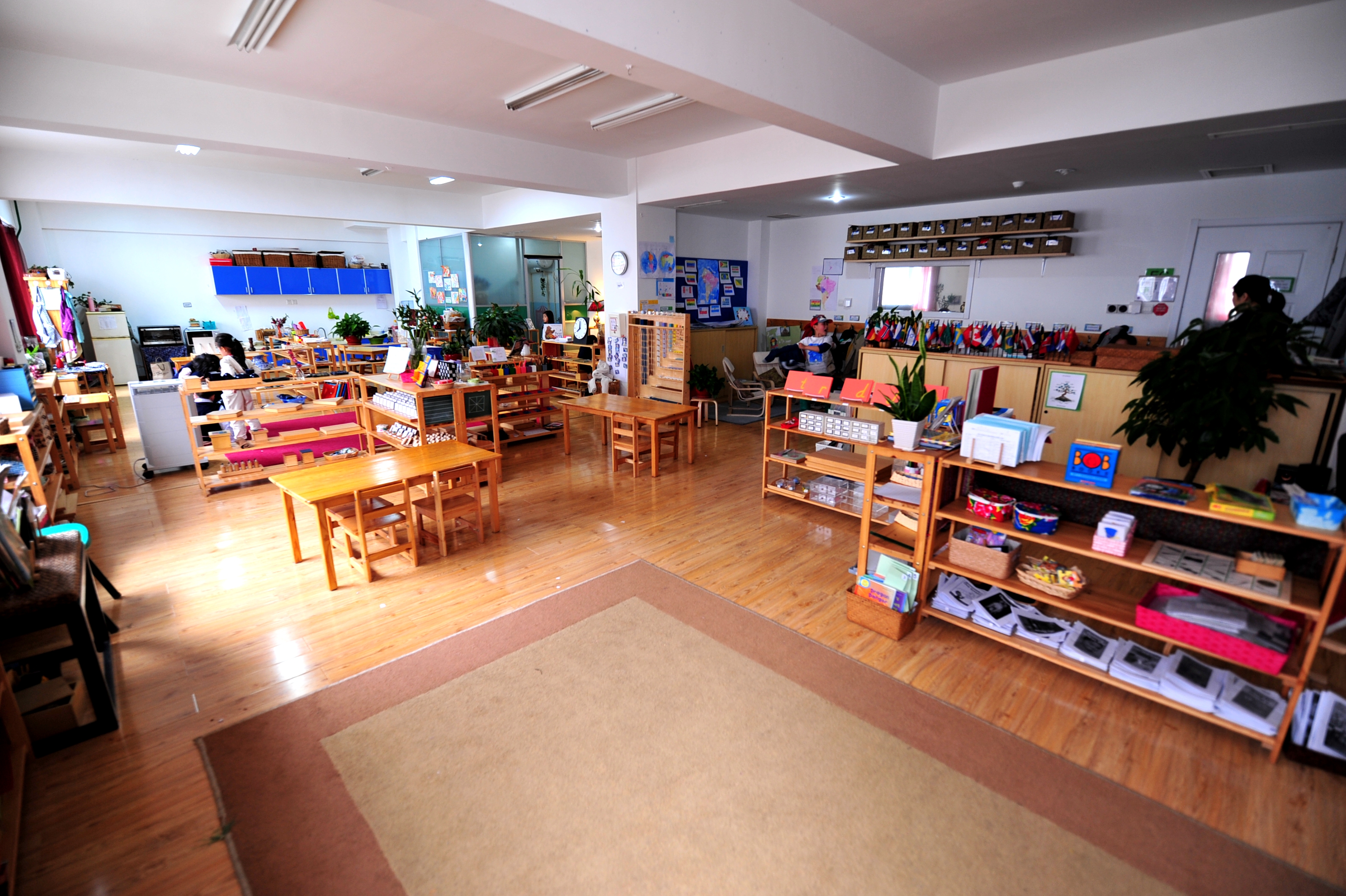
The prepared environment
Montessori classrooms are intentionally ordered so children can find what they need, use it independently, and return it when their work is complete. Furniture is child-sized. Materials are accessible. Each activity has a clear purpose and a defined place. This order is not decorative—it makes independence practical.
Hands-on learning
Children learn through movement and experience. Sensorial materials make abstract ideas visible and touchable. Practical-life activities strengthen coordination and self-care. Mathematics, language, science and culture are introduced through sequenced materials that allow children to build understanding step by step.
Choice, concentration and responsibility
Within clear classroom limits, children choose purposeful work. They learn to manage time, complete cycles of activity, solve problems, ask for help, and respect the concentration of others. Freedom and responsibility grow together.
Grace, courtesy and peace
Social learning is explicit. Children practice how to join a group, wait, interrupt respectfully, solve disagreements, care for shared materials and notice the needs of others. The classroom becomes a small community where empathy and leadership are lived every day.